TikTok Downloader Privacy Guide: Protect Your Data
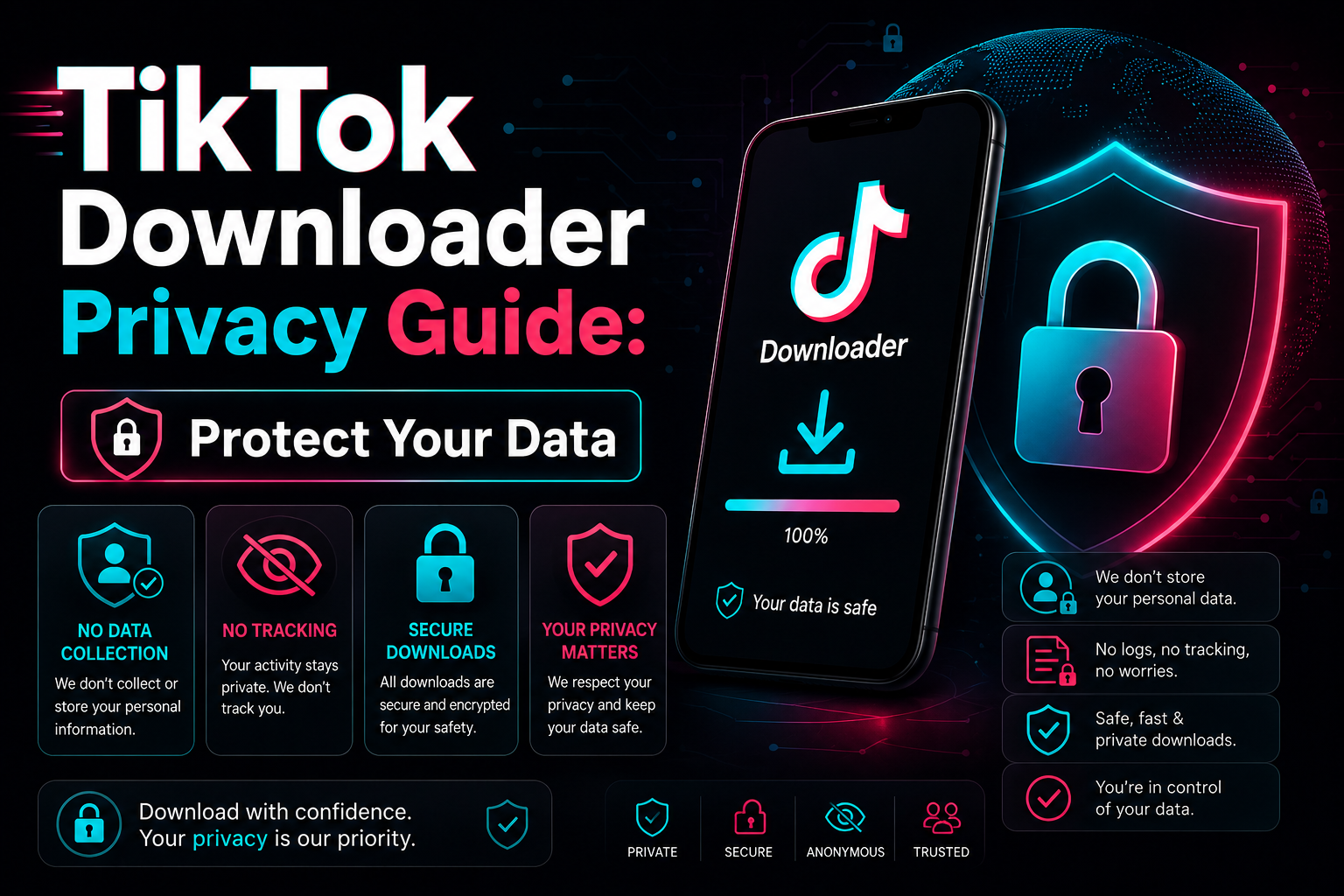
Table of Contents
Understanding App Telemetry and Tracker Ecosystems
Modern short-form video applications run on heavy consumer telemetry frameworks. When you load a content stream, the underlying system does not just buffer a file; it registers a network footprint mapping your device's exact configurations, hardware serial profiles, regional parameters, and cross-application clipboard telemetry. Every interaction leaves a persistent record on corporate servers.
Content creators, brand strategists, and researchers frequently require offline access to source media files to construct asset libraries or perform competitive research. However, accessing these files through insecure pipelines can unintentionally compromise structural network identities. Many third-party utilities rely on harvesting your unique device IDs to monetize their infrastructure, exposing your primary work devices to data-broker networks.
Native Downloader Apps vs. Browser Environments
When selecting a toolkit for media archiving, users face a structural choice: installing native mobile applications (.apk or .ipa files) or utilizing browser-based, client-side web platforms. This choice directly determines your baseline operational privacy profile.
Security Protocol Warning: Installing executable files on mobile devices grants external binaries permission layers that can bypass basic browser sandboxing protections.
Native applications frequently request extended privileges under the guise of functionality. They may demand deep read-and-write permissions to your internal file storage system, location tracing access, and background network initialization capabilities. These access layers allow low-tier software providers to silently harvest device fingerprint profiles, map local network hardware addresses, and track clipboard modifications even when the utility is ostensibly closed.
Conversely, browser-based tools run within standard sandbox layers enforced by web engines. A clean web engine restricts page executions to isolated process pools. A website cannot systematically read local storage fields, scan device system logs, or map device application registries unless explicit, granular prompt permissions are explicitly confirmed by the user.
The Anatomy of Data Risks in Media Scraping
When an unverified scraping script extracts an asset, it can execute hidden operations. Understanding these vulnerabilities allows developers and creators to design robust asset retention pipelines.
1. Device Fingerprinting and Tracking Scripts
Malicious utilities often skip simple cookies in favor of active device fingerprinting. By parsing your browser configuration parameters—including HTML5 Canvas rendering engine details, installed font arrays, screen pixel distributions, and system hardware concurrency values—a tracking node can assemble a persistent hardware identity profile that remains trackable even across dynamic IP resets or browser cache purges.
2. Hijacking the System Clipboard
To provide a smooth user experience, many downscaling apps use automated clipboard extraction scripts. If a utility gains raw permission to monitor background copy events, it can read anything stored in your active system clipboard memory. This creates a significant threat vector if sensitive credentials, operational project notes, or secure authentication keys are temporarily cached in system memory.
Essential Privacy Safeguards for Creators
To safely archive digital culture or source high-fidelity reference files, ensure your processing setups utilize clear network isolation frameworks:
- Utilize Isolated In-Browser Sandbox Sessions: Execute your validation and scraping sessions exclusively within dedicated browser profiles or private browsing windows to prevent cross-origin cookie tracking.
- Audit Browser Extension Registries: Periodically review installed helper applications. Avoid adding third-party browser add-ons that demand complete webpage structural manipulation permissions.
- Employ Network-Level Proxy Filtering: Run active ad-blocking filters or network-level DNS configurations to drop unsolicited connection handshakes directed toward suspicious data-harvesting end-points.
- Sanitize Copied Links Manually: Before passing an extracted URL into an analytical tool, purge unnecessary tracking metadata strings. Remove any tracking strings beginning with
?_t=or&_r=, as these contain analytical identifiers linking back to your personal viewing account profile.
How TikTop Implements Zero-Knowledge Architectures
At TikTop, user security is treated as a fundamental design constraint rather than a feature checklist. The platform runs on a modern serverless extraction pipeline engineered around complete anonymity and data minimization principles.
Our extraction nodes act as anonymous parsing proxies. When you submit a target URL, the platform completely decouples your request footprint. The connection handshake to the platform's CDN nodes originates directly from our distributed cloud servers, hiding your local network address and preventing target platforms from tracking your download activity.
Furthermore, TikTop maintains a strict zero-retention data policy. No historical logs tracking parsed URL targets are kept, no long-term session storage is created, and all media assets processed through our node clusters are instantly cleared from volatile RAM caches the second the file transmission stream closes. Your creative workflow remains completely yours.
Frequently Asked Questions
Does TikTop store a historical record of the video links I process?
No. TikTop uses a stateless architecture. Once an extraction endpoint parses a media file and streams the clean binary data payload down to your browser instance, all tracking metrics and temporary cache nodes are permanently destroyed from server memory.
Why is a web-based downloader safer than downloading a native tool app?
Web applications are constrained by the browser's native sandbox architecture. This prevents the tool from inspecting your local network hardware, accessing background system services, or modifying system storage directories without authorization.
Can social media networks track my profile when I paste a link into TikTop?
Not if you clean the URL parameters. By scrubbing individual tracking tokens from the raw link string prior to parsing, you break the identity chain. TikTop's processing arrays request the raw asset payload anonymously from our edge cloud nodes, completely hiding your personal session context.
Experience Safe, Anonymous Asset Extraction
Protect your digital workspace with our secure, tracking-free extraction systems today.
Launch TikTop Downloader
Related Content Strategy Guides

TikTok Video Downloader API Guide
Comprehensive technical breakdown on integrating automated, unwatermarked extraction frameworks.
Read Article →
How to Download Multiple Videos at Once
Discover how the TikTop multi-downloader automates batch workflows, saving valuable production time.
Read Article →
The Future of TikTok Downloaders
Learn about the upcoming technical architecture shifts, serverless nodes, and AI integrations.
Read Article →